
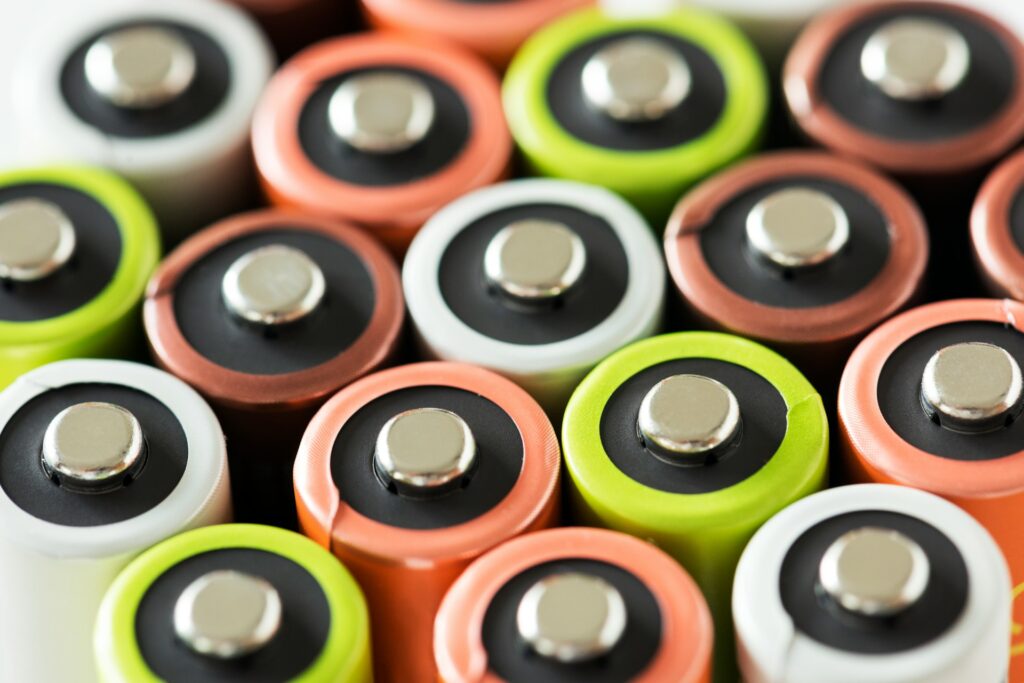
Every day, without thinking too much, we throw used batteries into the waste can. They are small, exhausted, and seem harmless. But behind that simple everyday gesture hides an environmental threat that poisons soils, pollutes rivers and destroys entire ecosystems.
What many do not know is that this act, multiplied by millions, represents one of the most invisible but powerful forms of global pollution. And the most paradoxical thing: what we discard today as garbage could be a powerful source of wealth and employment.
Transforming batteries can save the planet
By Gabriel E. Levy B.
For decades, humanity celebrated technological advancement without stopping too long to look at its waste. The battery, that invention that stores energy and facilitates modern life, appeared as a symbol of freedom: it allowed us to move without cables, to wear watches on our wrists, to play without being tied to a plug. But with each breakthrough, came a new challenge: What to do with batteries when they are no longer useful?
In the twentieth century, the indiscriminate dumping of batteries became a constant. The mayor’s offices did not have differentiated plans for their treatment and people, oblivious to their polluting effects, threw them away along with the rest of the domestic garbage.
What they didn’t know, and many still don’t, is that a single alkaline battery can contaminate up to 167,000 liters of water, according to figures from the U.S. Environmental Protection Agency (EPA).
The battery is a container of heavy metals encapsulated in a casing. When that casing rusts, metals seep into the soil and water. Among the elements they contain are mercury, cadmium, lead, nickel and lithium, all highly toxic and persistent in the environment.
In Europe, Directive 2006/66/EC on batteries and accumulators obliged member countries to establish collection and recycling systems.
But in Latin America, where the consumption of these devices has grown in the last two decades, legislation has been late and, in many cases, ineffective.
Lithium also dies
In the era of electric mobility and smart devices, batteries multiplied.
They are no longer just those of the remote control or the wall clock: they are the ones that move electric cars, power pacemakers, give life to mobile phones, drones, toothbrushes and electric bicycles. And each of them, when exhausted, enters a chain of decisions that will make the difference between a viable planet or an increasingly toxic one.
In countries such as Argentina, Mexico, Brazil or Colombia, only a small percentage of the batteries that are discarded are recycled.
In many cases, they end up incinerated, which releases polluting gases into the air, or abandoned in open-air landfills, where they slowly seep into the subsoil.
The impact is profound and long-lasting: entire rivers can be affected, crops contaminated with heavy metals, and communities exposed to diseases derived from prolonged exposure to these toxins.
Most alarmingly, many of these materials are not only polluting, but also non-renewable and strategic resources.
Lithium, for example, is one of the most coveted minerals by the technology and automotive industry.
According to the Global Lithium Sources study by researcher Cristina Villegas (2020), in less than 20 years we could face a critical shortage if massive recycling systems are not implemented.
«What you pollute today, tomorrow could feed you»
Although the outlook seems bleak, the story has a promising side. Because while batteries are a threat when disposed of poorly, they also represent an opportunity if they are properly managed.
Battery recycling, in addition to reducing environmental impact, can become a profitable and sustainable business.
In countries such as Belgium or Japan, battery recycling is already an established industry.
Companies such as Umicore have developed advanced processes to recover precious metals from used batteries.
But the most interesting thing is that these models do not only work in rich countries: they can also be adapted to local contexts, generating green employment and boosting community economies.
In Peru, there are campaigns to collect domestic batteries that involve schools, businesses and community centers.
Experience showed that with adequate awareness campaigns and basic infrastructure, it is possible to generate a local value chain from waste.
In Argentina, projects, promoted by the National University of La Plata, seek to design a decentralized lithium battery recycling system, combining technical knowledge with citizen participation.
In Colombia, in many residential complexes, shopping centers and companies, it is already possible to find special containers for batteries, as part of the environmental regulations.
«The battery of the future begins in the jar of the present»
The challenge is to build bridges between consumption and responsibility, between portable energy and environmental awareness.
In conclusion, every battery we carelessly dispose of is a potential threat, but also a wasted opportunity.
The proper management of this waste can not only prevent serious ecological damage, but can also generate a new green economy based on the recovery of materials.
Recycling batteries is not an ecological luxury: it is an urgent need and a tangible promise of sustainable development.
References:
- EPA (Environmental Protection Agency). «Household Batteries.» www.epa.gov.